
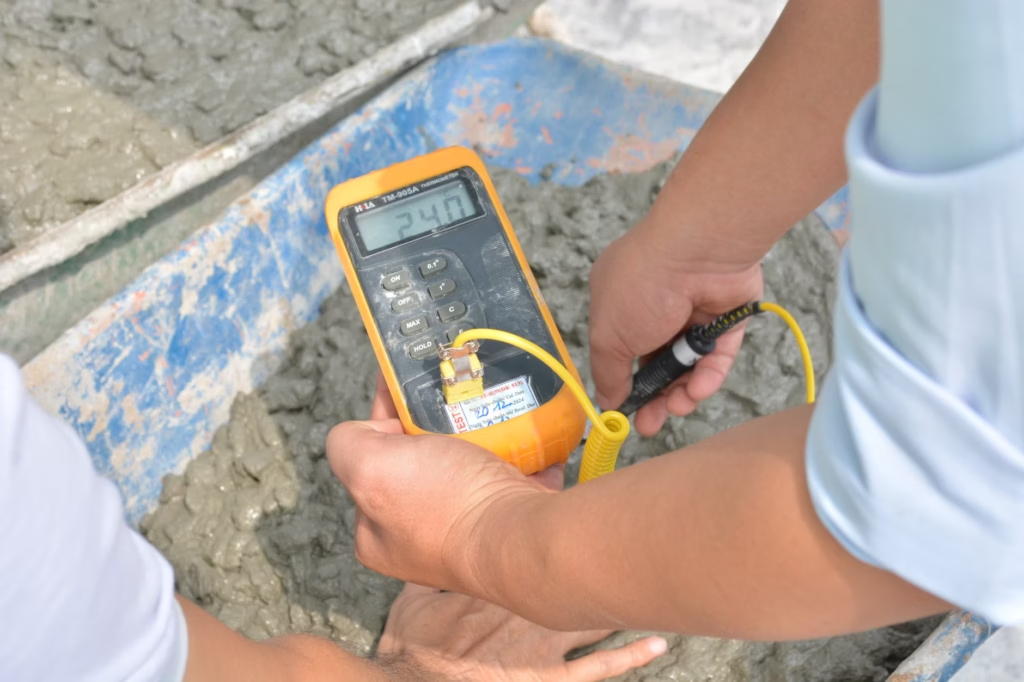
The leaves are down, the sun still feels strong at lunch, and by dinner you can see your breath. That’s fall here. A lot of homeowners call us in October because they want a clean, new drive before the holidays, or they’re tired of stepping over the same trip crack at the garage.
Shoulder season work is doable, but it runs on timing. Concrete does not care that it’s 72°F at 2 p.m. if it drops into the 30s after dark. Those cold nights change how we schedule the pour, how we protect the slab, and what we will not rush. If we miss the window, you can get surface dusting, weak edges, or scaling that shows up later.
This is how we handle fall concrete driveway installation so it cures hard, stays tight, and doesn’t get surprised by the first real cold snap.
Daytime warmth is not the same as curing conditions
A fall pour can look perfect while we’re finishing, then get into trouble overnight. Concrete gains strength through hydration, and that reaction slows way down when the concrete temperature drops. Once the slab falls under about 50°F, the set and early strength gain drag out. If it gets near 32°F before it has enough strength, the water in the paste can freeze and disrupt the surface.
We don’t guess. We plan around the low temp, the wind, and how fast the subgrade is going to pull heat out of the mix. In the shoulder season we aim to place earlier in the day, not late afternoon, so the slab has hours of warmth after placement. We also watch the forecast for the first 24 to 48 hours, because that’s where most cold weather damage starts.
If the forecast is flirting with freezing, we treat it as a cold weather placement. That means insulating blankets on hand, a curing plan that keeps moisture in, and no shortcuts on protection just because the sun is out.
Ground temperature and dry soil can steal your cure
In fall the ground cools down faster than people think, especially after a few clear nights. Even if the air hits 70°F, the base under the driveway can be much colder, and that base acts like a heat sink. If we place on a cold, dry subgrade, the slab loses heat from the bottom while also losing water into the soil.
That second part matters here. Our soils can be thirsty. If the subgrade is dusty and dry, it will wick moisture out of the fresh concrete. That can leave the top paste short on water, which shows up as a weak, dusty surface later.
Before we place concrete driveway replacement or new work, we prep the base and bring it to a workable moisture condition. Not muddy, not saturated. Just damp enough that it does not rob the mix. We also compact in lifts and proof-roll where needed, because a cold snap does not create settlement, it just makes existing soft spots show up sooner.
If a homeowner has irrigation overspray hitting the driveway edge, we flag it. Water at the edges during cold nights is a fast track to spalling.
Mix choices we use for cold nights (without chasing problems later)
Fall work is not the time for mystery mixes. We order a standard ready-mix designed for exterior flatwork, then adjust for the weather and the jobsite. The goal is a mix that finishes well, hits strength on schedule, and does not get “helped” so much that it shrinks and cracks.
A few specifics we control:
- Water-cement ratio: we keep it tight. Adding water on site to “make it easier” is how you get a weaker surface and more shrinkage.
- Air entrainment: for exterior slabs that will see freeze-thaw exposure, an air-entrained mix is the right call. Those tiny air voids give freezing water room to expand.
- Admixtures: in cooler weather we may use a non-chloride accelerator if the schedule and temperatures call for it. We do not use calcium chloride in flatwork where it can contribute to corrosion risk around steel and surface issues.
We also batch for the actual placement conditions. If it’s windy and dry, we plan for higher evaporation rates even if it’s cool. That’s a different problem than freezing, but it hits the finish just as hard.
Finishing in fall: avoid a sealed-in weak surface
Cold nights and warm afternoons mess with finishing timing. If we close the surface too early, we trap bleed water. That water has to go somewhere, and it leaves a weak layer right at the top. If we wait too long because the surface looks “set,” we can tear the paste and leave a rough, brittle skin.
This is where good concrete driveway repair starts before the slab even has damage. We finish based on what the concrete is doing, not the clock.
A few jobsite realities in October:
- Shorter daylight: we plan lighting if needed, but we do not want to be troweling in the dark. For driveways, a broom finish needs to be consistent, and that takes visibility.
- Wind: afternoon wind can dry the surface fast. If evaporation outruns bleed water, you can get plastic shrinkage cracking within hours.
- Temperature drop: the slab can look ready, then stiffen quickly as the sun drops.
We use evaporation control methods as needed (wind breaks, fog misting, and curing compound at the right time). We do not sprinkle water onto the surface to “bring it back.” That’s a recipe for scaling.
Curing and protection: the first 48 hours decide a lot
Curing is not a buzzword. It’s what turns paste into a hard, durable surface. In fall, curing is also protection from that overnight temperature dip.
For concrete driveway installation we typically use one of two approaches, sometimes both:
Curing compound
We apply a curing compound that meets ASTM C309. It forms a film that slows moisture loss, and it helps the slab gain strength evenly. It has to go on at the right moment, after finishing and once surface sheen is gone.
Insulating blankets
If the forecast calls for low 30s or a clear night with big radiational cooling, we cover the slab. Concrete blankets are not tarps. We use insulated curing blankets that hold heat in and reduce temperature swing. The goal is to keep the concrete temperature above 50°F during early cure.
What we do not do is cover fresh concrete with plastic that’s laid directly on the surface. That can trap condensation and leave blotchy curing and soft spots. If plastic is used at all, it’s part of a system, and it’s tented or separated so it does not mark the finish.
Access, traffic, and jobsite timing in shoulder season
Fall schedules are tight. People have family coming in, deliveries, and school pickup lines. A driveway is not a patio tucked in the backyard. It’s how you live.
We plan the jobsite around access, because the most common early damage we see is traffic too soon. Concrete might look hard the next morning, but that does not mean it is ready for vehicle loads. Turning tires on green concrete can twist the surface and chip edges, especially at control joints and corners.
We set expectations before we start:
- Foot traffic: usually after about 24 hours in mild weather, longer if nights are cold.
- Vehicle traffic: commonly a week, sometimes longer depending on temperatures and mix design.
We also think through where the ready-mix truck and chute will go, and where the pump hose might need to run if access is tight. In fall, we want less waiting time on site. Concrete that sits in the truck too long can start to set, and then everybody is fighting it.
For homes in Albuquerque, NM with north-facing drives that stay shaded, we treat them like a colder jobsite. Shade changes everything.
What to fix now versus what can wait until spring
Not every driveway problem needs a full tear-out in October, and not every crack should be ignored until spring. The right move depends on what the slab is doing.
Concrete driveway repair makes sense now if:
- The crack has vertical displacement (one side higher). That’s a trip hazard, and it usually points to base movement.
- You have spalling at the edge where water sits. Freeze-thaw will keep chewing that up.
- The garage apron is breaking down where tires turn and brake.
Concrete driveway replacement is the better call if:
- The slab has multiple areas of settlement and you see ponding after a hose test.
- You have widespread surface failure, not just a few isolated chips.
- Prior patches are failing and the slab is acting like separate panels.
If we are doing full replacement in fall, we pay extra attention to curing protection and schedule. If the forecast turns, we may recommend pushing the placement date. That is not us being difficult. That is us keeping your new driveway from starting its life with cold damage baked in.
This is also the time of year homeowners start calling about roof leaks after the first wind-driven rain. If we’re already on site for concrete, we can look at flashings, pipe boots, and scuppers, because water management around the house affects slabs too. (If you want the bigger picture, start with Roofing 101.)
Key Takeaways
- A slab that drops near 32°F in the first day can suffer surface damage that shows up later as scaling and weak edges.
- We plan fall pours around overnight lows, not the afternoon high, and we protect the slab for at least 24 to 48 hours.
- Dry subgrade can steal mix water and leave a dusty surface, so base moisture condition matters before placement.
- Air-entrained exterior mixes and controlled water-cement ratio help durability, especially heading into winter.
- Vehicle traffic too early can chip corners and twist the surface, even if the driveway looks hard the next morning.
Conclusion
Fall is a good time to get a driveway done, as long as the work is scheduled like fall work. That means starting early enough in the day, keeping the mix consistent, and having real curing protection ready before the truck shows up. Cold nights are not a surprise in October, and we do not treat them like one.
If you’re looking at concrete driveway installation or you’re deciding between repair and replacement, we’ll walk the slab with you and talk through what the weather is going to do over the next week. Then we set a plan that fits your access needs and gives the concrete the cure it needs to last.