
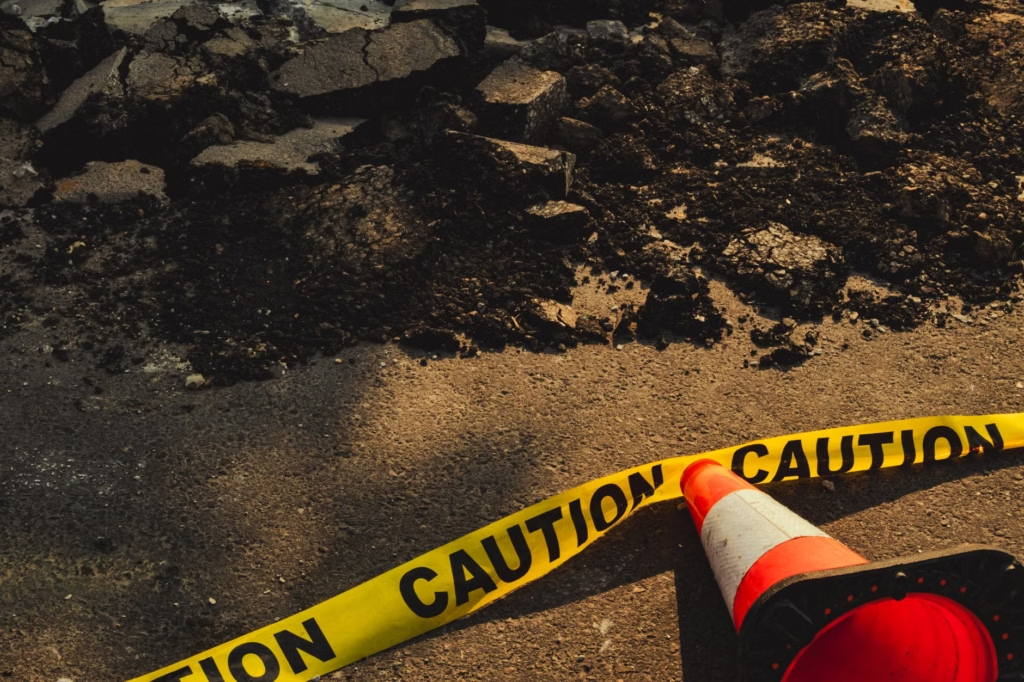
You notice it when you’re hauling groceries in at dusk. One corner of the driveway is proud of the rest, just enough to catch a toe. Or there’s a rough spot by the walkway where the top layer popped off and left a sharp edge. In October the sun is low, shadows stretch, and these little changes show up fast.
Around here, the problem is rarely “the whole driveway is failing.” It’s usually a few specific spots that got stressed all summer, then start acting up when nights cool off. A slab that bakes in full sun all day and then drops hard after sunset moves. A shaded area stays damp longer after irrigation or a rain. Add a little de-icer in the wrong place later, and you get pop-outs and lips that were not there in spring.
This is the month to walk it, mark it, and fix the parts that turn into a winter hazard.
Trip edges usually come from a lifted corner, not a new crack
A trip edge is most often one panel sitting higher than the next at a joint, or a corner that lifted and stayed there. It can happen without a dramatic crack running across the slab. The giveaway is a clean height change right at a control joint or construction joint.
We check it with a straightedge and a tape. If you can catch a 1/4 inch lip with the edge of a shovel, it will catch a shoe. If it is closer to 1/2 inch, it is a real fall risk, especially at the walkway tie-in and the front step.
What makes it worse in fall is repeated temperature swing. Concrete expands when it warms and contracts when it cools. If one panel is shaded and the next is in full sun, they do not move the same amount. That mismatch loads the joint. Add a little soil movement under an outside corner, and the panel can rock up and stay proud.
A proper repair starts with identifying which panel is moving and why. Grinding a high edge can help, but if the panel is still rocking, the lip comes back.
Pop-outs and surface chips get triggered by moisture, then cold nights
Those little “divots” that appear overnight are usually pop-outs. They look like a shallow bowl, often 1 inch to 3 inches across, where a small piece broke loose. In Albuquerque, NM we see them show up where water sits on the surface longer, shaded strips near walls, along the garage return, and under trees.
The usual chain is moisture plus a weak spot near the surface. That weak spot might be a porous aggregate particle, a bit of finishing paste that got overworked, or an area that took extra water from sprinklers. When temperatures drop toward freezing at night, any trapped moisture expands. It does not take a deep freeze to start the damage. If your forecast is calling for nights hovering around 32°F and you have wet spots that stay dark in the morning, expect those areas to be the first places you see pop-outs.
De-icing habits matter too. Calcium chloride and magnesium chloride work fast, but they can be hard on young or already-scaling concrete. Rock salt (sodium chloride) is not gentle either. If a driveway has any surface weakness, de-icers tend to find it.
Repairing pop-outs is not a smear of patch and done. We clean to sound concrete, use a bonding agent when the product calls for it, and place a polymer-modified repair mortar that is rated for exterior freeze-thaw.
Sun and shade make joints curl, which is how lips start
Concrete panels curl when the top and bottom of the slab are at different temperatures or moisture levels. In fall, the top face can cool fast after sunset while the underside stays warmer. Or the top stays warmer in sun while the underside stays damp and cool in shaded areas. Either way, the panel wants to bend.
Curling shows up at the edges first. You will feel it with your foot at the joint line. The panel edge is up, the next panel is down, and you get that little step.
We look at exposure. A south-facing run that gets hammered by sun all day behaves differently than a north strip that stays shaded. We also look for sprinklers that hit one side of a panel and not the other. Uneven wetting keeps one side swollen and the other dry.
If curling is mild, a grind and seal plan can be enough. If it is significant, we look at whether the panel is rocking. Rocking panels often need the void under the edge addressed, not just the top.
One simple homeowner check: run a 4 foot level across the joint. If it teeters, the panel edge is unsupported. Fixing the support is what keeps the repair from repeating.
Fall inspection: mark hazards and figure out if they are active
A good inspection is slow and boring. That is the point. Pick a bright afternoon, then come back at dusk when shadows show texture.
Bring chalk, a tape measure, and a straightedge. Mark every spot that catches your shoe, stroller wheel, or trash can. Then measure the height change. Write it right on the concrete, “3/8” or “1/2.” If you are seeing a lip grow, you want proof.
Check these areas first:
- Walkway tie-ins and the public sidewalk edge. Those are high foot-traffic zones.
- The garage apron where tires turn. Turning loads can break weak edges.
- Expansion joints at the house or any thickened edge. Different thicknesses cool differently.
Now decide if it is active. Active means it is moving. Look for fresh, clean concrete at the edge, new spalls, or a joint that is opening wider than it was in summer. If you have a phone photo from July, compare.
A repair done on a moving condition without addressing the cause turns into a yearly patch job. We would rather fix the driver once.
Grinding, patching, or replacing a panel, pick the fix that matches the failure
Not every trip hazard needs a full tear-out. Some do. The right repair depends on what failed.
Grinding works when you have a stable high edge and sound concrete. We use a concrete grinder with a shroud and a vacuum. The goal is a smooth taper, not a sharp bevel that flakes later. After grinding, we like to seal the exposed surface if the driveway is prone to surface wear.
Patching works for pop-outs, corner spalls, and small surface losses. The key is prep. All loose material comes out. Edges get squared up so the patch has something to lock into. For exterior flatwork we use polymer-modified repair mortars or epoxy mortar systems depending on depth and exposure. A thin feather edge is a common failure mode, so we avoid leaving patch material at a paper-thin edge.
Panel replacement is the clean fix when a section is broken through, badly curled, or has multiple trip edges across the same panel. We sawcut the perimeter, remove the panel, rework the base, then pour back to thickness and tie into adjacent concrete where appropriate.
If you want Concrete Driveway Repair Evergreen results, the repair has to match the mechanism, not just the symptom.
Joint and edge sealing: keep water out before the first hard freeze
A lot of trip-edge problems get worse because water gets into joints and along edges, then cycles cold at night. Sealing is not glamorous, but it is one of the best fall moves.
First, the joint has to be clean and dry enough for the sealant to bond. That usually means pressure washing and then giving it time to dry. In October, shaded joints can stay damp longer than you think.
For joints that are meant to be sealed, we use a polyurethane or self-leveling joint sealant in the right joint geometry. Depth matters. If the sealant is too deep, it cannot stretch right. If it is too thin, it tears. Backer rod (closed-cell foam) sets the depth and keeps the sealant from bonding to the bottom of the joint, which lets it move as designed.
At driveway edges and along the garage return, we also look at the soil line. If dirt is piled against the slab edge, it holds moisture there. Pulling soil back a bit and keeping water from sitting against the edge reduces winter scaling and corner spalls.
We do this work before consistent freezing nights. Once the cold locks in, materials cure slower and moisture control gets harder.
How we plan fall driveway work so it cures right and stays safe
Concrete and repair mortars are picky about temperature. You can place them in fall, but you have to respect the cure. If you want the deeper version of what changes in October and November, this is worth a read: fall concrete driveway work in Albuquerque.
For new flatwork or panel replacement, we plan pours around the forecast. Fresh concrete wants to stay above 50°F for steady strength gain, and you do not want it freezing while it is green. If nights are dipping, we adjust. That can mean an earlier pour time, insulated blankets, and keeping the surface from drying too fast in our wind.
For repair mortars, we follow the product data sheet. Some want the substrate above 40°F. Some want it warmer. We do not guess. If a patch freezes before it gains strength, it powders at the edges and starts debonding.
We also manage traction. A ground area can be slick if it is polished by accident. We finish repairs so the texture matches the driveway, and we do not leave a smooth “skate patch” where water will sit.
If you are calling concrete contractors now, this is the kind of planning you should expect to hear. It is also why a fall schedule fills up. The weather window is real.
Key Takeaways
- A 1/4 inch lip at a joint is enough to catch a toe, measure it with a straightedge and tape and mark it in chalk.
- Pop-outs are often 1 to 3 inches wide and show up where moisture sits, then nights hover around 32°F.
- Curling from sun and shade can make a panel edge lift, a 4 foot level will show rocking at the joint.
- Grinding helps only if the panel is stable, rocking panels need the support underneath addressed.
- Joint sealant performance depends on joint depth control, backer rod keeps sealant from bonding on three sides.
Conclusion
If your driveway is starting to bite at shoes now, it will not get friendlier after the first stretch of cold nights. The fix is usually straightforward, but only if you pick it based on what is actually happening at that spot, lifted edge, pop-out, or a curled panel that is rocking.
Walk it this week. Mark the hazards. Measure the lips. If you want us to look at it, we will tell you what can be ground and sealed, what needs a real patch, and what section is far enough gone that replacement is the cleaner move. If you are thinking about Concrete Driveway Replacement down the road, this inspection still helps, because it shows which exposures and habits are beating the concrete up so the next install lasts longer.